
By clicking “Accept,” you agree to the storage of cookies on your device to improve website navigation, analyze site usage, and support our marketing efforts. For more information, please see our Privacy Policy.
_web.jpg)

All Insights
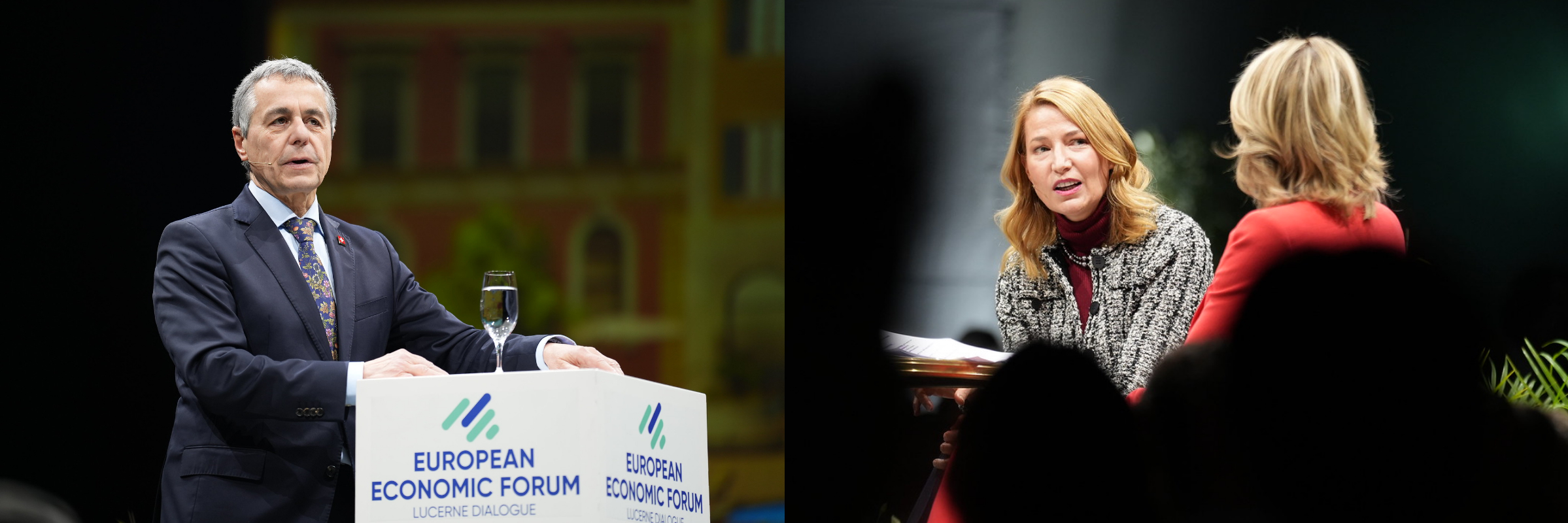
Ignazio Cassis opened the forum with a blunt message: Switzerland is not a bystander, it is at the centre of these developments. For Switzerland, Europe is not optional – it is a geographic and strategic reality. Global conflict, fragile democracies, economic disruptions: none of this spares a country that prides itself on stability and neutrality. Cassis reminded the audience that Switzerland thrives on Europe’s strength – and suffers from its weakness.
Next, Suzanne Heywood, COO of Exor Group, spoke about resilience – an idea she knows intimately from her youth on a sailboat, far from any emergency services. Crises taught her calm, composure, and leadership under pressure. For Heywood, good leadership does not show in calm seas but under stormy skies. As she put it: “Resilience is the ability to see things in proportion, and therefore to be, not to overreact to the smaller things.”
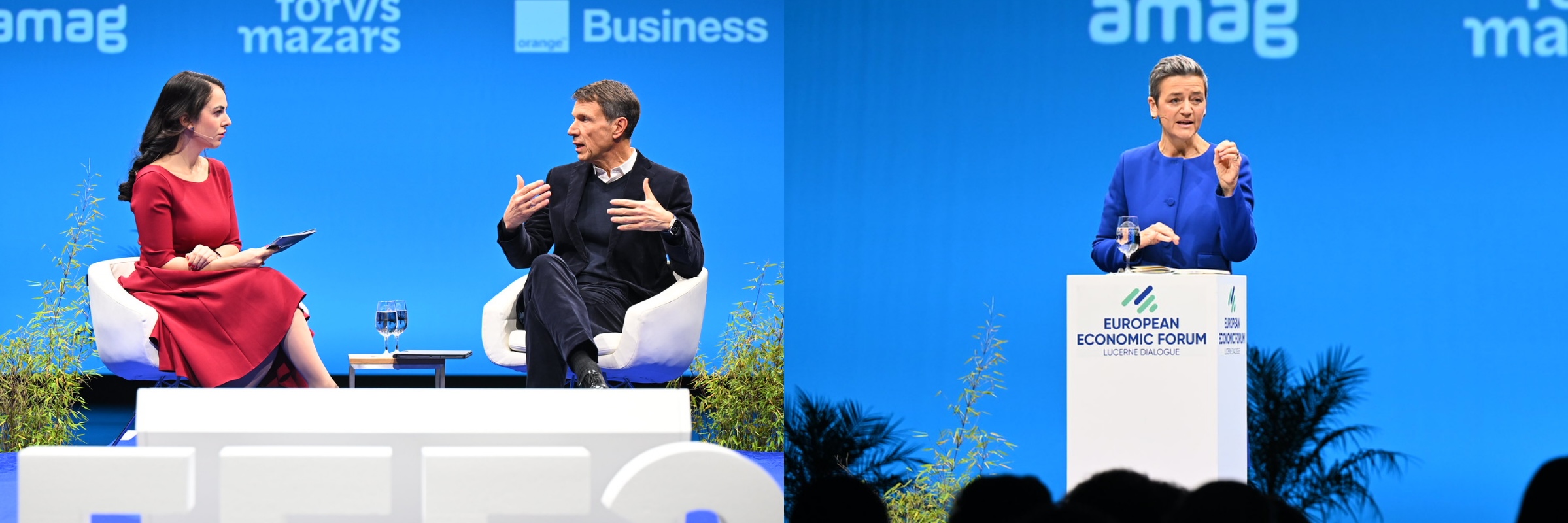
René Obermann, Chairman of Airbus SE, set the tone for the second day. His call was clear: Europe must rediscover its courage. Airbus shows what is possible when collaboration wins over envy. A company of its scale isn’t built on caution—it is built on daring. Obermann urged that industrial strength should again be seen as a strategic mission, not a political afterthought – urgently, because Europe’s security depends on it. His message to business leaders was firm: “If business leaders don’t speak up, political leaders can’t act. Our voices matter.”
Then Margrethe Vestager, former Vice President of the European Commission, continued: global dynamics have shifted. “We no longer live in stable disorder. We live in accelerating, unpredictable disorder.” For Vestager, competitiveness is not just a metric – it is a survival question. Those who over regulate stifle progress; those who hesitate lose. Europe must stop distrusting innovation and start acting decisively. Her warning stuck: nothing costs Europe more than hesitation.
The morning sessions felt like being at the pulse of the present: How do we move people and goods in a world that must be both greener and faster? How do we lead organisations when old certainties crumble? What is the role of artificial intelligence, when power increasingly rests on data? And what happens to Europe’s influence when political turbulence unsettles even trusted economic partners?
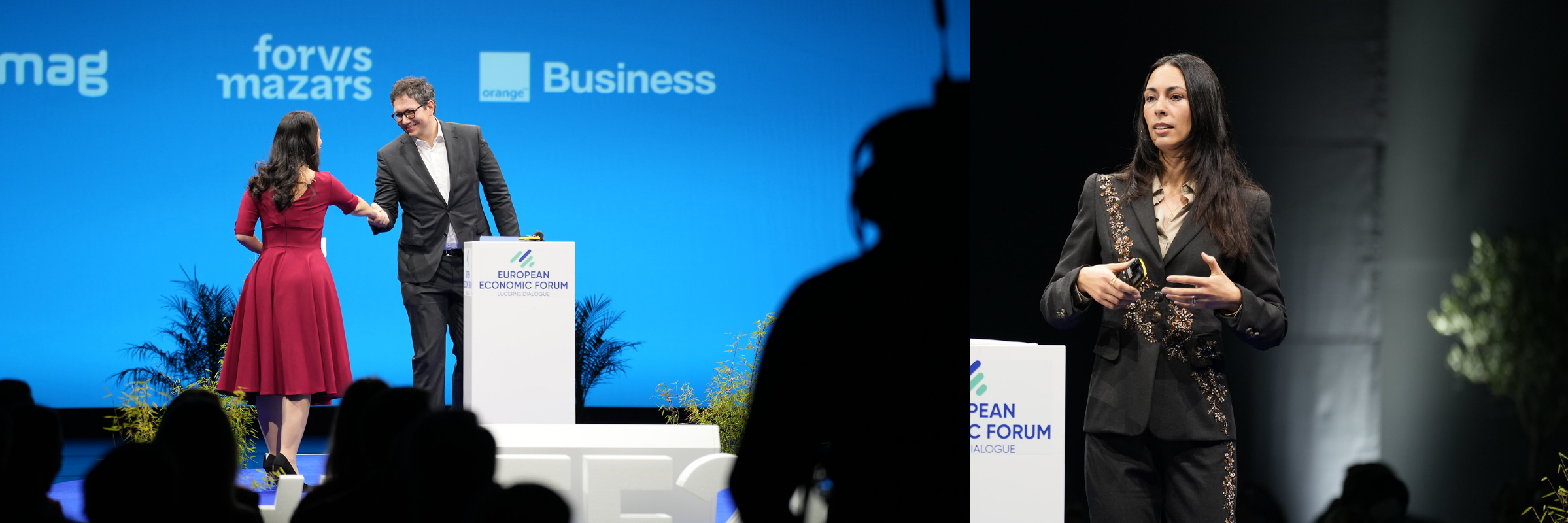
Next came a focus on democracy – not as an abstract ideal, but as daily practice. The “Democracy Days” project, winner of the EEF hackathon, demonstrated how companies can empower employees to participate meaningfully. After all, democracy must be lived, not just preached.
Then Gaya Herrington, Vice President of Sustainability Research at Schneider Electric, addressed the growth question anew. She did not speak of the end of prosperity, but of redefining what prosperity means. Growth is more than consumption. Europe can lead by redefining success – as stability, quality of life, and sustainable resource management.
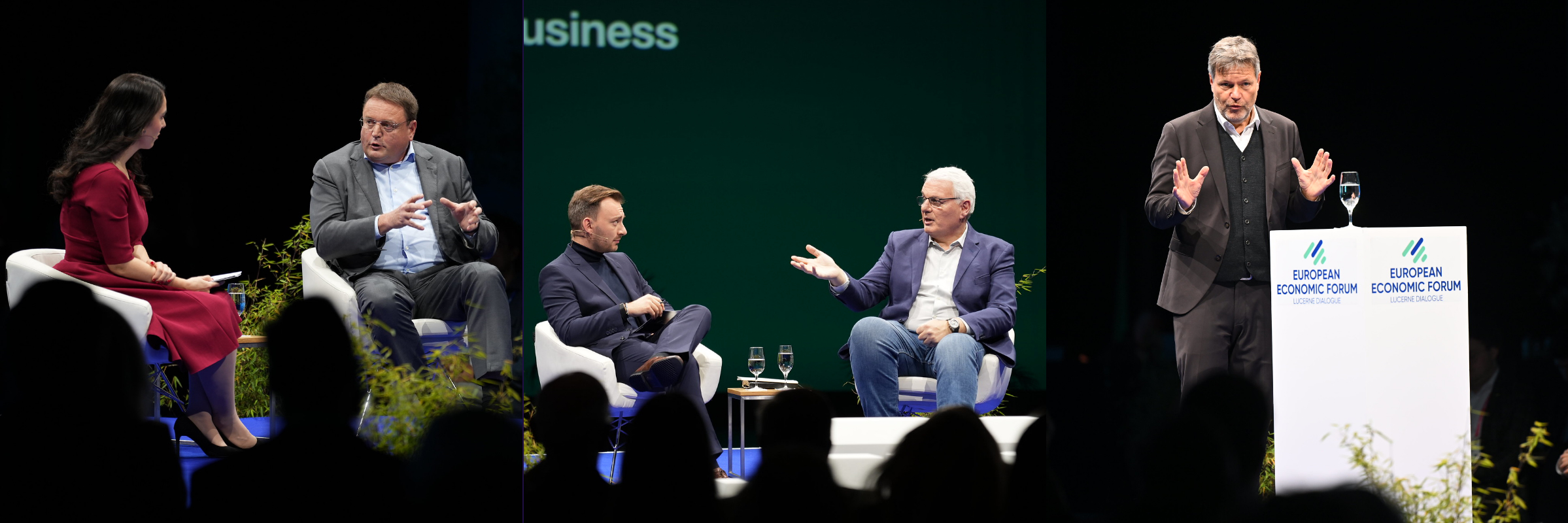
Stefan Paul, CEO of Kuehne+Nagel International AG, reminded the audience how quickly political shocks can upend global supply chains. When US tariffs hit Chinese imports, volumes dropped by 50% in just three weeks – proof that trade routes are fragile and volatility is real. Europe is losing ground, he warned. “Europe was the powerhouse – but we no longer dominate the industries of the future.” Firms must align with growth markets, manage risks proactively, and rethink partnerships.
Bruno Giussani, author and curator, followed with a sobering reminder: Europe’s digital dependency is its Achilles’ heel – and a direct threat to its sovereignty. Today, platforms, data streams, and software largely lie outside Europe’s control – often with dubious foreign corporations. Giussani’s message was sharp: if Europe wants sovereignty, it must reclaim digital power. Sure, it might cost us 10% of our convenience – but we would gain 100% digital sovereignty.
The closing keynote, the “Lucerne Speech” by former German Vice Chancellor and Economy Minister Robert Habeck, spoke frankly about Europe’s isolation in the world and the threat from authoritarian regimes that coordinate well and reject the idea of a united Europe. Europe can no longer expect others to secure its safety. Economic strength, military reliability and political resolve must come together. And it requires bravery: “We need more visionary thinking. The old world is gone, and no one will hand Europe a role in the new one.” What matters now is what Europe does itself.
EEF25 was both a warning and a pledge. The warning: Europe is faltering and wasting valuable time. The pledge: It still has the strength, the people and the institutions to regain influence – if it dares. All speakers spoke of courage, clarity, and speed. Europe has the potential. But now it needs coordinated will.


You will find more information about our upcoming activities in our newsletter.

Register here for our newsletter!
