
By clicking “Accept,” you agree to the storage of cookies on your device to improve website navigation, analyze site usage, and support our marketing efforts. For more information, please see our privacy policy.

alle Beiträge
Across Europe, local economies are absorbing energy shocks, automation, authoritarian drift, demographic shifts, and ecological disruption all at once. As capital moves across borders, risk remains local, leaving public systems to carry more than they were built to hold. In a system where growth is the main metric of success, resilience is sidelined.
So the question shifts. It is less about democracy surviving in principle and more about whether communities have the capacity to act together in practice.
In some places, that capacity is being built quietly.
Much of Europe’s ingenuity lives in communities, not policy papers, but libraries, repurposed buildings, shared spaces. People work with what is at hand: relationships, skills, trust, and limited resources.
In certain places, this effort is supported by a growing civic architecture of community-owned institutions. Some mobilise trust and philanthropic resources. Others circulate capital locally, convene unlikely actors, cultivate leadership, create space for experimentation and entrepreneurship, or share risk.
On their own, these institutions look modest. Taken together, they function as democratic infrastructure. They counter extractive dynamics that pull value from places while leaving social and ecological costs behind. They offer continuity and trust where public systems are overstretched and markets indifferent. You might not notice them at first glance, but once you do, a pattern emerges.
In Sibiu, Romania, a community foundation has grown its role without endowments. The Sibiu International Marathon turns fundraising into civic participation. Urban leadership programmes cultivate confidence and relationships across sectors. Over time, the foundation has become something close to a civic operating system, mobilising money, legitimacy, and trust, which are reinvested locally. Civic capital here is built through participation, not inherited wealth.
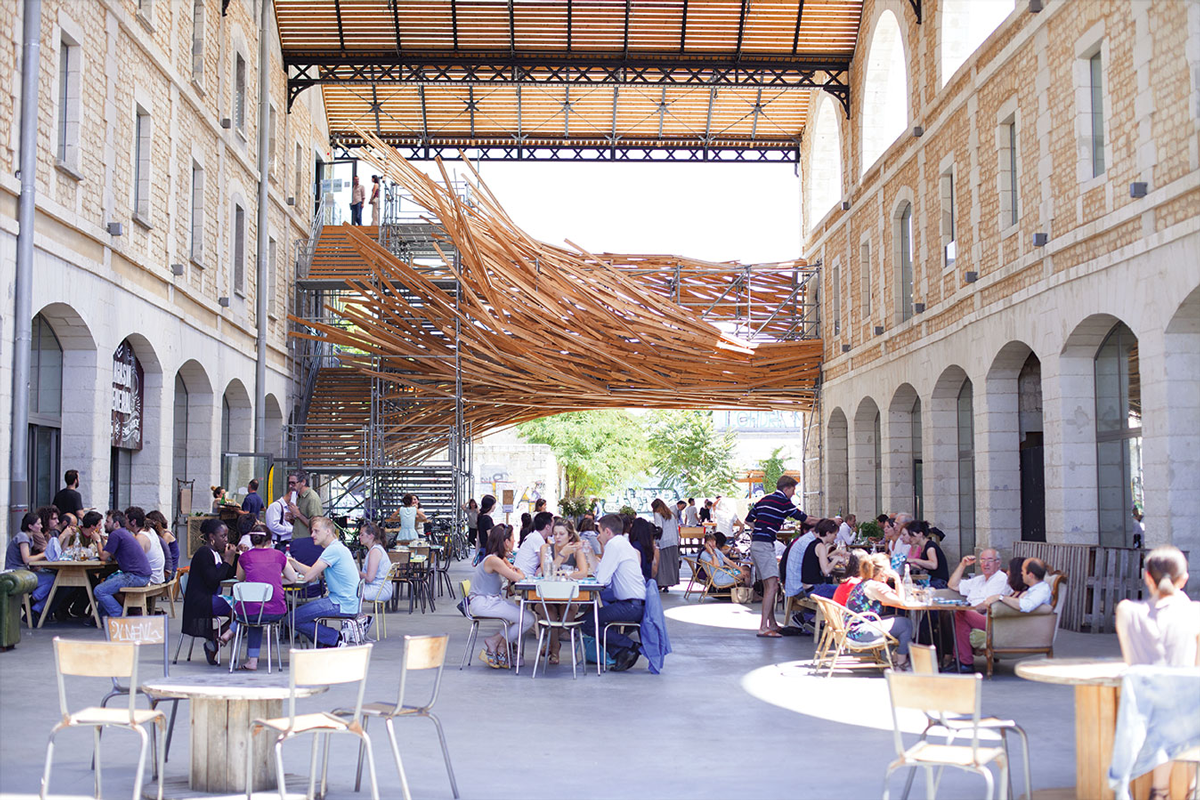
In Südtirol, BASIS occupies a former military barracks and functions as a commons for experimentation. Through residencies, workshops, and innovation services, it helps local actors rethink what their assets are and what they might become. Adaptation here is spatial, cultural, and imaginative, shifting intellectual and economic monocultures.
Across Europe, cooperative and ethical banks such as Fiare Banca Etica or Etina Banka add another layer. Democratically governed and member-owned, they align lending with social and ecological priorities and keep capital circulating locally.
None of these institutions is a silver bullet. But together they show that democracy can be organised, not only debated, in ways that strengthen a community’s ability to learn and act under pressure.
Local democracy cannot be separated from the economic system it lives within. Growth-focused prosperity generates volatility, and financial flows often outrun local accountability. In response, some institutions are experimenting with a different logic:
• Circulate rather than extract.
• Regenerate rather than deplete.
• Experiment rather than promise certainty.
Seen this way, communities resemble a distributed network of experiments, each testing how to organise finance, participation, care, and collaboration within real limits. Over time, these efforts form a learning system: a living library of practice for democratic resilience and adaptive local economies.
For business leaders, this changes the frame. The issue is not whether companies should compensate for struggling public institutions, but whether they are prepared to invest in the civic infrastructure that keeps economic life viable over time.
Civic infrastructure distributes risk, strengthens local capacity before crises, and anchors long-term value creation in place. This might mean providing patient capital to institutions building long-term local capacity, placing business capital in cooperative or ethical finance that keeps money circulating locally, or investing in learning and connectivity across these sites of experimentation. Not simply as corporate responsibility, but as co-investment in the conditions that allow markets and communities to endure.
If democracy is to hold under sustained ecological and economic strain, it will live where communities can learn, adapt, and act together. Across Europe, such architectures already exist, unevenly distributed and often overlooked. Imperfect, sometimes fragile, but rooted in legitimacy, memory, and local intelligence.
Democracy persists through what people build and sustain together. In times of pressure, communities rely on that foundation. The question is concrete: which infrastructures are we choosing to invest in, and where?
Alexandra Stef is a designer of collective processes and founder of Collective Futures, a practice focused on strengthening civic infrastructure and activating local assets for adaptive, place-based futures. She partners with community foundation networks and cross-sector leaders across Europe and beyond to build collective capacity and design place-based experiments in response to systemic strain.

all Insights
Across Europe, local economies are absorbing energy shocks, automation, authoritarian drift, demographic shifts, and ecological disruption all at once. As capital moves across borders, risk remains local, leaving public systems to carry more than they were built to hold. In a system where growth is the main metric of success, resilience is sidelined.
So the question shifts. It is less about democracy surviving in principle and more about whether communities have the capacity to act together in practice.
In some places, that capacity is being built quietly.
Much of Europe’s ingenuity lives in communities, not policy papers, but libraries, repurposed buildings, shared spaces. People work with what is at hand: relationships, skills, trust, and limited resources.
In certain places, this effort is supported by a growing civic architecture of community-owned institutions. Some mobilise trust and philanthropic resources. Others circulate capital locally, convene unlikely actors, cultivate leadership, create space for experimentation and entrepreneurship, or share risk.
On their own, these institutions look modest. Taken together, they function as democratic infrastructure. They counter extractive dynamics that pull value from places while leaving social and ecological costs behind. They offer continuity and trust where public systems are overstretched and markets indifferent. You might not notice them at first glance, but once you do, a pattern emerges.
In Sibiu, Romania, a community foundation has grown its role without endowments. The Sibiu International Marathon turns fundraising into civic participation. Urban leadership programmes cultivate confidence and relationships across sectors. Over time, the foundation has become something close to a civic operating system, mobilising money, legitimacy, and trust, which are reinvested locally. Civic capital here is built through participation, not inherited wealth.

In Südtirol, BASIS occupies a former military barracks and functions as a commons for experimentation. Through residencies, workshops, and innovation services, it helps local actors rethink what their assets are and what they might become. Adaptation here is spatial, cultural, and imaginative, shifting intellectual and economic monocultures.

Across Europe, cooperative and ethical banks such as Fiare Banca Etica or Etična Banka add another layer. Democratically governed and member-owned, they align lending with social and ecological priorities and keep capital circulating locally.
None of these institutions is a silver bullet. But together they show that democracy can be organised, not only debated, in ways that strengthen a community’s ability to learn and act under pressure.
Local democracy cannot be separated from the economic system it lives within. Growth-focused prosperity generates volatility, and financial flows often outrun local accountability. In response, some institutions are experimenting with a different logic:
• Circulate rather than extract.
• Regenerate rather than deplete.
• Experiment rather than promise certainty.
Seen this way, communities resemble a distributed network of experiments, each testing how to organise finance, participation, care, and collaboration within real limits. Over time, these efforts form a learning system: a living library of practice for democratic resilience and adaptive local economies.
For business leaders, this changes the frame. The issue is not whether companies should compensate for struggling public institutions, but whether they are prepared to invest in the civic infrastructure that keeps economic life viable over time.
Civic infrastructure distributes risk, strengthens local capacity before crises, and anchors long-term value creation in place. This might mean providing patient capital to institutions building long-term local capacity, placing business capital in cooperative or ethical finance that keeps money circulating locally, or investing in learning and connectivity across these sites of experimentation. Not simply as corporate responsibility, but as co-investment in the conditions that allow markets and communities to endure.
If democracy is to hold under sustained ecological and economic strain, it will live where communities can learn, adapt, and act together. Across Europe, such architectures already exist, unevenly distributed and often overlooked. Imperfect, sometimes fragile, but rooted in legitimacy, memory, and local intelligence.
Democracy persists through what people build and sustain together. In times of pressure, communities rely on that foundation. The question is concrete: which infrastructures are we choosing to invest in, and where?
Alexandra Stef is a designer of collective processes and founder of Collective Futures, a practice focused on strengthening civic infrastructure and activating local assets for adaptive, place-based futures. She partners with community foundation networks and cross-sector leaders across Europe and beyond to build collective capacity and design place-based experiments in response to systemic strain.


You will find more information about our upcoming activities in our newsletter.

Register here for our newsletter!
